AI Tutors vs. Real Teachers: Can EdTech Replace the Classroom?

As an educator and digital native, I’ve watched the rise of AI in education with both curiosity and concern. On one hand, I’m fascinated by the speed and convenience of AI-powered learning platforms. On the other, I ask myself: Can these smart machines really replace the human touch of real teachers? Or are we entering an age where education becomes less personal, less emotional, and dangerously transactional?

This debate is no longer just theoretical. In 2025, AI tutors are already reshaping the way we learn. From platforms like Khanmigo and Scribe AI to language bots and AI-enhanced homeschooling apps, students now have 24/7 access to interactive tutors who never sleep, never complain, and never get tired. But is that enough?

Let me break it down.


📈 The Pros: Why AI Tutors Are Gaining Ground

  1. Accessibility and Affordability

    AI tutors make education more accessible to remote or underserved communities, where qualified teachers are scarce. A student in a rural barangay can now learn algebra from a top-rated program without leaving their home—or spending a peso.

  2. Personalized Learning
    AI systems can instantly adjust to a student’s learning pace, identify gaps in understanding, and customize content. This is something even the most brilliant teacher might struggle to do consistently for 40 students at once.

  3. 24/7 Support
    No need to wait until the next school day to ask questions. AI chatbots are always available—offering real-time feedback and explanations that help reinforce learning anytime, anywhere.

  4. Data-Driven Insights
    AI can track learning progress in real time and generate detailed reports on strengths, weaknesses, and engagement—valuable tools for both students and educators.


⚠️ The Cons: What We Lose Without Real Teachers

  1. Lack of Emotional Intelligence

    AI may be smart, but it’s not empathetic. It can’t sense when a child is sad, distracted, or silently struggling. A good teacher does more than teach—they connect, motivate, and inspire.

  2. Cultural and Contextual Gaps

    AI models are still biased and often lack the cultural sensitivity needed to engage learners from diverse backgrounds. A machine can't always understand local dialects, socio-economic nuances, or community values.

  3. Risk of Dependency
    Relying too heavily on AI may reduce critical thinking. Students might begin to trust AI answers blindly instead of engaging in deeper learning or asking why.

  4. Equity and Access Divide
    Ironically, while AI aims to democratize education, it still requires stable internet, smart devices, and digital literacy—barriers that many learners in marginalized communities continue to face.

🎯 Challenges in Integrating AI in Education

As a blogger deeply invested in education advocacy, I see several challenges:

  • Teacher Resistance & Training: Many educators feel threatened by AI or lack the skills to integrate it into their teaching style effectively.

  • Ethical Concerns: Who controls the data? How is it used? Data privacy and surveillance are serious concerns in AI-based education.

  • Curriculum Compatibility: Most AI systems are still not fully aligned with national or local education standards.

  • Limited Engagement: AI tutors struggle to inspire creativity, teamwork, and leadership—the soft skills vital for life beyond school.

🧠 Can EdTech Replace the Classroom?

Here’s my honest take: AI will never replace great teachers—but it can empower them.

Technology is a tool, not a substitute. Real learning thrives in relationships—between teacher and student, peer and peer, learner and community. The classroom is not just a space for absorbing facts; it’s where social growth, character building, and real human interaction happen.

AI tutors can help deliver content. But only teachers can deliver compassion, adaptability, and moral grounding.

✅ My Recommendations:

  1. Train Teachers to Use AI, Not Compete With It
    Invest in capacity-building programs so educators can confidently integrate AI into their teaching strategies.

  2. Keep the Human at the Center
    Design EdTech platforms that enhance—not replace—human connection. Let AI handle routine tasks so teachers can focus on what matters: teaching with heart.

  3. Localize AI Content
    Customize AI learning tools to reflect local languages, contexts, and cultures—especially for public schools.

  4. Balance Screen Time with Real-World Activities
    Encourage hybrid models that combine digital tools with hands-on, collaborative, and community-based learning.

In the end, the future of education isn't AI versus teachers. It's AI and teachers—working together to build a smarter, more inclusive, and more compassionate generation.

Are we ready to embrace this partnership? I believe we must. Because the future of learning is not just digital—it’s human.

From TikTok to TruthTok: Can Short Videos Still Educate in 60 Seconds?

I remember the first time I scrolled past a TikTok explaining the theory of relativity in less than a minute. My initial thought was, “There’s no way that’s accurate.” But curiosity won, and after watching, I found myself Googling Einstein's theory—and then diving deeper into a rabbit hole of explainer videos. That was the moment I realized: short-form content is no longer just entertainment. It’s evolving into something more powerful—micro-education.

Over the past two years, TikTok, Instagram Reels, and YouTube Shorts have exploded with bite-sized knowledge: 60-second science, 30-second life hacks, 1-minute legal advice. A new term has even emerged among educators and creators: “TruthTok.” It’s a space where real information meets fast, visual storytelling. But while the trend is gaining momentum, the question remains: can you truly educate someone in 60 seconds?


The Significance: Why Short Videos Matter

As a researcher and a lifelong learner, I see this shift as revolutionary—especially in reaching younger audiences who often lack the attention span for long-form lectures or articles. Micro-learning caters to the fast-paced world we live in. It removes barriers like academic jargon and replaces them with clear visuals, storytelling, and practical takeaways.

In countries like the Philippines where internet access is often limited to mobile data, short videos make education more accessible. You don't need a classroom or even a laptop—just a smartphone and 60 seconds.

Plus, during the pandemic, short-form content helped bridge the gap between formal education and self-directed learning. It empowered creators—teachers, doctors, lawyers, and even farmers—to share their knowledge with a wider audience.


The Challenges: Speed vs. Substance

But there’s a catch.

While short videos offer accessibility and engagement, depth is often sacrificed. Explaining a complex concept like climate change, mental health disorders, or legal rights in under a minute can result in oversimplification or even misinformation.

Another issue is credibility. Anyone can post a video and claim to be an expert. Without verification or peer review, audiences may absorb biased or incorrect data. As an educator, I’ve seen students quote TikTok facts that lack scientific backing—and it’s alarming.

Additionally, algorithms tend to favor shock value over truth. This means that well-researched, fact-based videos may be buried beneath content that's merely catchy or controversial.


The Verdict: Can It Truly Educate?

Yes—but with caution.

Short videos can serve as educational gateways, sparking interest and curiosity. They are excellent for introducing concepts, raising awareness, and promoting digital literacy. However, they should not be viewed as replacements for comprehensive learning materials.

As a creator or teacher, I’ve learned to use short videos as hooks—entry points that lead to deeper discussion, reading, or long-form content. It’s about starting a conversation, not ending it.


Recommendation: Finding the Balance

In this age of instant content, the challenge is not to reject short-form education—but to harness it wisely. We need to promote responsible content creation, encourage viewers to verify sources, and most importantly, teach critical thinking alongside content consumption.

I recommend educators, influencers, and institutions embrace platforms like TikTok or Instagram not just as trends, but as tools for modern education. Blend entertainment with evidence, visuals with verifiability.

After all, if we can use 60 seconds to make someone laugh, cry, or buy something—we can also use it to teach them something true.
And maybe, just maybe, 60 seconds is all we need to open the door to a lifetime of learning.

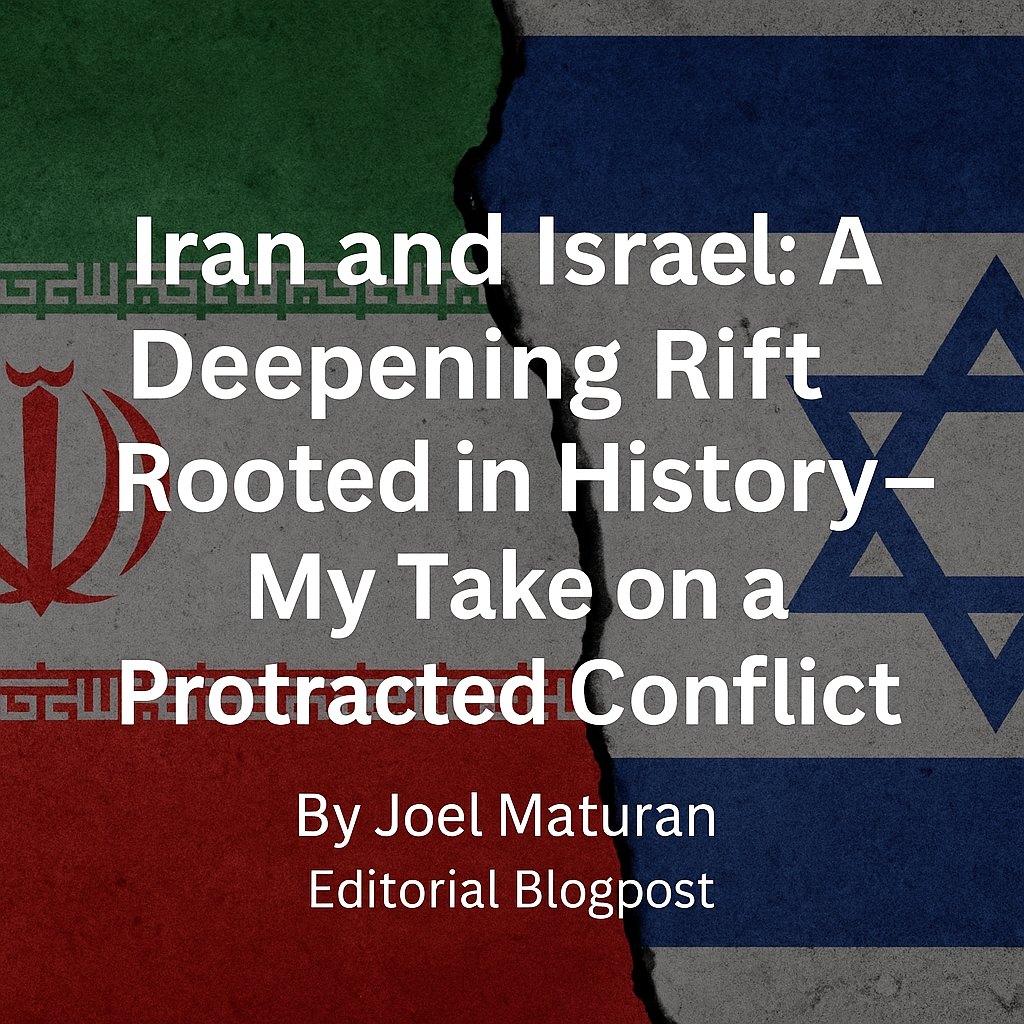
Iran and Israel: A Deepening Rift Rooted in History – My Take on a Protracted Conflict


As I sit down to write this, I realize that the Iran-Israel conflict is not just a regional issue—it is a global concern that ripples across borders, influences international diplomacy, and affects the everyday lives of people in the Middle East. As someone deeply concerned with peace, justice, and the interconnectedness of our world, I feel compelled to offer this reflection and analysis on one of the most complex and volatile rivalries of our time.


Origin of the Iran-Israel Conflict

The roots of the Iran-Israel conflict are political, ideological, and religious—woven into the fabric of shifting alliances and revolutionary upheavals.

Before 1979, Iran and Israel were strategic partners. Under the Shah of Iran (Mohammad Reza Pahlavi), Israel had diplomatic ties with Tehran, and both countries collaborated in areas such as intelligence, military cooperation, and trade.

However, the 1979 Islamic Revolution dramatically changed everything. Ayatollah Ruhollah Khomeini’s new theocratic regime denounced Israel as an illegitimate “Zionist entity,” refused to recognize its right to exist, and positioned Iran as a champion of the Palestinian cause. This shift marked the beginning of an open and enduring hostility between the two nations.


Historical Timeline of Conflict and Confrontations

  1. 1980s – Proxy Beginnings

    Iran began supporting anti-Israel groups like Hezbollah in Lebanon, a powerful Shi’a militia trained and funded by Iran’s Islamic Revolutionary Guard Corps (IRGC). This marked the rise of proxy warfare, a key element of the Iran-Israel rivalry.

  2. 1990s–2000s – Escalation Through Words and Arms
    Iranian leaders publicly called for Israel’s destruction, while Israel consistently lobbied the international community to counter Iran’s nuclear ambitions. Meanwhile, Iran expanded its network of influence in Gaza and Lebanon.

  3. 2006 Lebanon War
    A major conflict erupted between Israel and Hezbollah. Iran was accused of arming and financing Hezbollah's capabilities, which intensified Israeli concerns about Tehran’s strategic reach.

  4. 2010s – The Nuclear Shadow and Cyber Warfare
    Israel viewed Iran’s nuclear program as an existential threat. In 2010, the Stuxnet virus, believed to be a joint U.S.-Israeli operation, sabotaged Iran’s nuclear facilities. Covert assassinations of Iranian scientists followed—often blamed on Israeli intelligence.

  5. 2015 – JCPOA and Diplomatic Breathing Room

    The Iran Nuclear Deal (Joint Comprehensive Plan of Action) momentarily reduced tensions. Iran agreed to curb its nuclear program in exchange for sanctions relief. But Israel, led by then-Prime Minister Benjamin Netanyahu, fiercely opposed the deal, calling it a mistake.

  6. 2018–2023 – U.S. Withdrawal and Shadow War
    The Trump administration's withdrawal from the JCPOA reignited hostilities. Iran resumed uranium enrichment, while Israel conducted airstrikes in Syria targeting Iranian military positions, and attacks on Iranian weapons shipments intensified. Iran retaliated with drone strikes and escalated threats against Israeli infrastructure.

  7. 2024–2025 – Tensions on the Brink

    Ongoing Israeli attacks on Iranian operatives in Syria, Iran’s suspected coordination with groups like Hamas and Islamic Jihad, and regional destabilization following the war in Gaza have pushed the conflict into a dangerous, near-direct confrontation.


Failed Resolutions and Diplomatic Gaps

Throughout this long-standing conflict, attempts at resolution have been limited, fragmented, and mostly indirect. There is no formal diplomatic engagement between the two states, and regional summits often exclude any real Israeli-Iranian reconciliation effort.

The JCPOA was the most structured attempt to de-escalate tensions, but it failed to address the ideological, regional, and military components of the Iran-Israel rivalry. Moreover, normalization deals like the Abraham Accords further alienated Iran, which viewed them as a betrayal of Palestinian interests.


My Reflections and a Call for a New Perspective

As I reflect on this decades-long animosity, I can’t help but see the tragedy of potential lost to pride, ideology, and militarism.

Iran and Israel are two ancient civilizations with rich histories, brilliant minds, and cultural legacies that have inspired humanity. And yet, their narrative today is written in the language of missiles, proxy wars, and existential fear.

This conflict has become a vortex, sucking in neighboring states, global superpowers, and innocent civilians—Palestinians, Israelis, Lebanese, Syrians—who pay the ultimate price while governments wage ideological warfare.


Unique Conclusion: A Conflict That Needs Rewriting

The Iran-Israel conflict is not fated. It is sustained by choices, policies, and posturing—and therefore, it can also be rewritten by courage, dialogue, and mutual recognition.

I believe the path to peace begins not in Geneva or Tehran or Tel Aviv, but in the collective will to stop dehumanizing the other. Peace requires empathy, truth, and courageous leaders willing to be unpopular for the sake of future generations.


Recommendations for Peace and Progress

  1. Reinvigorate Diplomatic Channels
    A backdoor dialogue mechanism between Iran and Israel, possibly facilitated by neutral countries like Switzerland or Oman, could open lines for crisis management and confidence-building.

  2. Regional Peace Framework
    The UN or a regional peace council could initiate a Middle East non-aggression pact framework—binding countries like Iran, Israel, Saudi Arabia, and Turkey to regional de-escalation terms.

  3. People-to-People Diplomacy
    Cultural exchange programs, academic collaborations, and diaspora dialogues can break down decades of demonization.

  4. Stop the Proxy Arms Race
    Both Iran and Israel must restrain from arming militias and engaging in asymmetrical warfare. The region needs fewer weapons, more schools.

  5. Strengthen Civil Societies
    Support NGOs, peace movements, and young activists from both sides who are calling for dialogue over division.


Final Word

As a global citizen, a peace advocate, and a student of history, I choose to believe in the power of dialogue over destruction. The Iran-Israel conflict may seem intractable, but even the most bitter rivalries can end—when both sides dare to see beyond the past and begin to write a different story.

A story not of vengeance, but of vision.


#IranIsraelConflict #MiddleEastPeace #EditorialOpinion #GlobalAffairs #JoelEMaturanWrites

A Critical Analysis of the War on Drugs Campaign by President Rodrigo Roa Duterte: Gains, Gaps, and the Road Ahead

In 2016, President Rodrigo Roa Duterte launched the controversial “War on Drugs” as a centerpiece of his administration. Backed by tough rhetoric and a promise to eliminate the country’s drug problem, the campaign drew both praise and condemnation. This blog post provides a balanced and critical analysis of the program—its background, execution strategies, effects on society, and lessons for future governance.

The War on Drugs was formally initiated through Project Double Barrel, spearheaded by the Philippine National Police (PNP) in July 2016. It aimed to eradicate illegal drug use and trade, primarily through a two-pronged approach:

  • Oplan Tokhang – derived from Visayan words “toktok” (knock) and “hangyo” (plead), involved police officers visiting homes of suspected drug users and pushers, urging them to surrender and undergo rehabilitation.

  • Oplan HVT (High-Value Target) – focused on identifying, neutralizing, or apprehending high-profile drug personalities and syndicates.

Prior to Duterte’s presidency, the Philippines faced a growing problem with methamphetamine hydrochloride, locally known as “shabu.” Previous administrations acknowledged the issue but implemented softer community-based rehabilitation programs. Duterte, drawing from his Davao City governance style, championed a more hardline and immediate approach.

Strategies

  1. Nationwide Tokhang Operations
    Police conducted house-to-house visits, initially emphasizing voluntary surrender. However, operations soon turned aggressive, with reports of nighttime raids and violent confrontations.

  2. Involvement of Barangay Watchlists
    Local officials compiled names of suspected users and pushers, which were then validated and used as targets for police operations.

  3. Use of PNP and PDEA Collaboration
    The PNP led the initial wave but, after growing criticism, the Philippine Drug Enforcement Agency (PDEA) later took a more prominent role.

  4. Encouragement of Citizen Reporting
    Community members were encouraged to report drug-related activities, increasing surveillance and accountability—but also fostering fear and suspicion.

  5. Establishment of Community-Based Rehabilitation
    Amid criticism, the administration promoted Barangay-based rehabilitation centers and reintegration programs for voluntary surrenderees.


Pros of the War on Drugs

  • Heightened National Awareness
    Drug addiction and trafficking were placed front and center of public discourse.

  • Massive Drug Surrender Statistics
    As of late 2021, over 1.3 million drug personalities reportedly surrendered nationwide, per government statistics.

  • Crackdown on Drug Syndicates
    Numerous high-value targets were neutralized, and several drug labs were dismantled.

  • Barangay Engagement
    The program decentralized anti-drug efforts, making barangays frontline players in implementation and monitoring.


Cons and Criticisms

  • Alleged Human Rights Violations
    Over 6,000 deaths in anti-drug operations (as per PNP reports), with independent bodies claiming higher numbers. Many of these involved alleged extrajudicial killings.

  • Fear and Breakdown of Community Trust
    Communities grew wary of law enforcement. Accusations of abuse of power, mistaken identities, and planting of evidence surfaced.

  • Poor Targeting and Inconsistent Data
    The process of identifying drug suspects was often unclear, with limited validation mechanisms. This led to possible wrongful deaths and arrests.

  • Overburdened Criminal Justice System
    Courts and detention facilities were overwhelmed, resulting in delayed hearings and congestion in jails.

  • Minimal Focus on Rehabilitation
    Critics argued the campaign was punitive and lacked substantial investment in long-term rehabilitation and reintegration.

Impact to Society

  1. Social Polarization
    The campaign deeply divided public opinion—some hailed Duterte as a crime-fighting hero, while others saw the campaign as authoritarian and inhumane.

  2. International Backlash
    Organizations like the UN, Human Rights Watch, and the International Criminal Court (ICC) launched inquiries and condemned the alleged rights violations.

  3. Influence on Law Enforcement Culture
    The campaign emboldened police forces, but also raised issues of impunity, lack of oversight, and abuse of power.

  4. Rise of Civil Society Movements
    NGOs, church groups, and human rights defenders became more vocal and active, demanding transparency and justice.


The War on Drugs under PRRD was a defining chapter in modern Philippine governance. It aggressively confronted a real national problem but did so through a method fraught with ethical dilemmas and legal controversies.

Key takeaways:

  • Drug issues require a holistic approach—addressing not just supply, but demand, poverty, education, and mental health.

  • Rule of law must prevail—combating crime must not come at the cost of human dignity and due process.

  • Community engagement is vital—barangays should be empowered, not militarized.

  • Post-campaign healing is necessary—truth, justice, and support for victims’ families must be prioritized.

As the Philippines moves forward, future anti-drug programs must learn from the past—balancing firmness with fairness, and enforcement with empathy.


Author's Note:
This analysis does not seek to discredit the intention to create a drug-free Philippines but to call for a more humane, evidence-based, and sustainable approach in addressing such a complex issue.


#WarOnDrugs #DuterteAdministration #HumanRights #PhilippineGovernance #BarangayEmpowerment #CommunityBasedSolutions

Christopher “Bong” Go: A Comprehensive Profile of the 2025 Senatorial Election Topnotcher

Senator Christopher Lawrence "Bong" Tesoro Go emerged as the top vote-getter in the 2025 Philippine senatorial elections, securing over 27 million votes nationwide. His resounding victory underscores the Filipino electorate's trust in his brand of public service, characterized by accessibility, compassion, and a focus on healthcare and grassroots programs.


🧑‍🎓 Early Life and Education

Born on June 14, 1974, in Davao City, Bong Go completed his secondary education at La Salle Green Hills. He pursued higher education at De La Salle University, where he studied Management, and later earned a Bachelor of Science degree in Marketing from Ateneo de Davao University.


🏛️ Political Career and Rise to Prominence

Go's political journey began in 1998 as the executive assistant to then-Davao City Mayor Rodrigo Duterte. He continued to serve Duterte in various capacities, eventually becoming the Special Assistant to the President (SAP) and Head of the Presidential Management Staff from 2016 to 2018.

In 2019, Go transitioned into elective office, winning a seat in the Senate. His tenure has been marked by a focus on healthcare, social welfare, and disaster response, often personally overseeing aid distribution and community outreach programs.


📜 Legislative Accomplishments

As a senator, Bong Go has been instrumental in authoring and sponsoring numerous laws aimed at improving the lives of Filipinos

  • Malasakit Centers Act (RA 11463): Establishes one-stop shops in government hospitals to streamline medical and financial assistance for indigent patients. As of early 2025, 167 Malasakit Centers have been established nationwide, benefiting over 17 million Filipinos.

  • Salary Standardization Law V (RA 11466): Increases the salaries of government employees, including teachers and nurses, enhancing their welfare and motivation. 

  • Department of Migrant Workers Act (RA 11641): Creates a dedicated department to streamline services and protection for Overseas Filipino Workers (OFWs).

  • Bureau of Fire Protection Modernization Act (RA 11589): Modernizes the BFP through equipment upgrades, personnel training, and infrastructure development.

  • Regional Specialty Centers Act (RA 11959): Establishes specialized medical centers across regions to decentralize healthcare services.

In the 18th Congress, Go authored 12 laws, co-authored 20, and sponsored numerous others, reflecting his active legislative role.


🏥 Healthcare Advocacy

Go's tenure is notably marked by his commitment to healthcare:

  • Super Health Centers: Initiated the establishment of over 700 centers nationwide to provide primary care, medical consultations, and early disease detection. 

  • PhilHealth Reforms: Advocated for expanded benefits, especially for the top 10 mortality diseases, ensuring better coverage for critical illnesses.

  • Pandemic Response: Co-authored the Bayanihan to Heal as One Act (RA 11469) and Bayanihan to Recover as One Act (RA 11494), providing the government with necessary tools to combat COVID-19 and aid affected sectors. 


🏆 Recognitions and Public Trust

Go's dedication has earned him several accolades:

  • Legacy Award of Excellence in Public Service (2023): Awarded during the Philippine Legacy Gala for his contributions to healthcare and public service.

  • Outstanding Senator (2024): Recognized by the Public Attorney's Office for his legislative work and advocacy. 

Public trust in Go remains high, with surveys consistently placing him at the top in terms of awareness and approval ratings.


🗳️ 2025 Senatorial Election Victory

In the 2025 elections, Go's platform of "Malasakit at Serbisyo" (Compassion and Service) resonated deeply with voters, leading to his top-ranking finish. His hands-on approach, especially in times of crisis, and his focus on healthcare and social welfare, solidified his reputation as a public servant dedicated to the Filipino people.


Senator Bong Go's journey from a presidential aide to a top-ranking senator exemplifies a career dedicated to public service, with a focus on healthcare, social welfare, and grassroots engagement. His legislative accomplishments and continued advocacy reflect his commitment to uplifting the lives of Filipinos across the nation.

Popular Post