From TikTok to TruthTok: Can Short Videos Still Educate in 60 Seconds?

I remember the first time I scrolled past a TikTok explaining the theory of relativity in less than a minute. My initial thought was, “There’s no way that’s accurate.” But curiosity won, and after watching, I found myself Googling Einstein's theory—and then diving deeper into a rabbit hole of explainer videos. That was the moment I realized: short-form content is no longer just entertainment. It’s evolving into something more powerful—micro-education.

Over the past two years, TikTok, Instagram Reels, and YouTube Shorts have exploded with bite-sized knowledge: 60-second science, 30-second life hacks, 1-minute legal advice. A new term has even emerged among educators and creators: “TruthTok.” It’s a space where real information meets fast, visual storytelling. But while the trend is gaining momentum, the question remains: can you truly educate someone in 60 seconds?


The Significance: Why Short Videos Matter

As a researcher and a lifelong learner, I see this shift as revolutionary—especially in reaching younger audiences who often lack the attention span for long-form lectures or articles. Micro-learning caters to the fast-paced world we live in. It removes barriers like academic jargon and replaces them with clear visuals, storytelling, and practical takeaways.

In countries like the Philippines where internet access is often limited to mobile data, short videos make education more accessible. You don't need a classroom or even a laptop—just a smartphone and 60 seconds.

Plus, during the pandemic, short-form content helped bridge the gap between formal education and self-directed learning. It empowered creators—teachers, doctors, lawyers, and even farmers—to share their knowledge with a wider audience.


The Challenges: Speed vs. Substance

But there’s a catch.

While short videos offer accessibility and engagement, depth is often sacrificed. Explaining a complex concept like climate change, mental health disorders, or legal rights in under a minute can result in oversimplification or even misinformation.

Another issue is credibility. Anyone can post a video and claim to be an expert. Without verification or peer review, audiences may absorb biased or incorrect data. As an educator, I’ve seen students quote TikTok facts that lack scientific backing—and it’s alarming.

Additionally, algorithms tend to favor shock value over truth. This means that well-researched, fact-based videos may be buried beneath content that's merely catchy or controversial.


The Verdict: Can It Truly Educate?

Yes—but with caution.

Short videos can serve as educational gateways, sparking interest and curiosity. They are excellent for introducing concepts, raising awareness, and promoting digital literacy. However, they should not be viewed as replacements for comprehensive learning materials.

As a creator or teacher, I’ve learned to use short videos as hooks—entry points that lead to deeper discussion, reading, or long-form content. It’s about starting a conversation, not ending it.


Recommendation: Finding the Balance

In this age of instant content, the challenge is not to reject short-form education—but to harness it wisely. We need to promote responsible content creation, encourage viewers to verify sources, and most importantly, teach critical thinking alongside content consumption.

I recommend educators, influencers, and institutions embrace platforms like TikTok or Instagram not just as trends, but as tools for modern education. Blend entertainment with evidence, visuals with verifiability.

After all, if we can use 60 seconds to make someone laugh, cry, or buy something—we can also use it to teach them something true.
And maybe, just maybe, 60 seconds is all we need to open the door to a lifetime of learning.

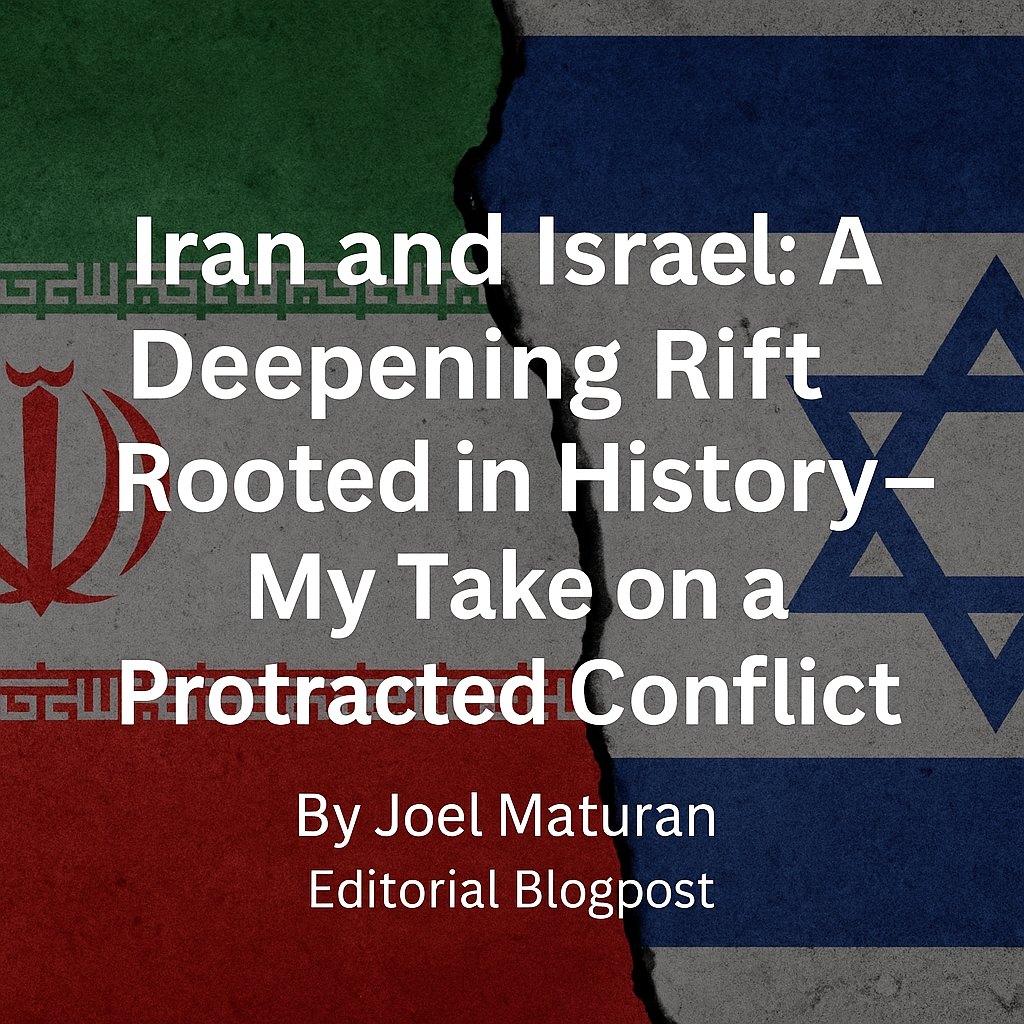
Iran and Israel: A Deepening Rift Rooted in History – My Take on a Protracted Conflict


As I sit down to write this, I realize that the Iran-Israel conflict is not just a regional issue—it is a global concern that ripples across borders, influences international diplomacy, and affects the everyday lives of people in the Middle East. As someone deeply concerned with peace, justice, and the interconnectedness of our world, I feel compelled to offer this reflection and analysis on one of the most complex and volatile rivalries of our time.


Origin of the Iran-Israel Conflict

The roots of the Iran-Israel conflict are political, ideological, and religious—woven into the fabric of shifting alliances and revolutionary upheavals.

Before 1979, Iran and Israel were strategic partners. Under the Shah of Iran (Mohammad Reza Pahlavi), Israel had diplomatic ties with Tehran, and both countries collaborated in areas such as intelligence, military cooperation, and trade.

However, the 1979 Islamic Revolution dramatically changed everything. Ayatollah Ruhollah Khomeini’s new theocratic regime denounced Israel as an illegitimate “Zionist entity,” refused to recognize its right to exist, and positioned Iran as a champion of the Palestinian cause. This shift marked the beginning of an open and enduring hostility between the two nations.


Historical Timeline of Conflict and Confrontations

  1. 1980s – Proxy Beginnings

    Iran began supporting anti-Israel groups like Hezbollah in Lebanon, a powerful Shi’a militia trained and funded by Iran’s Islamic Revolutionary Guard Corps (IRGC). This marked the rise of proxy warfare, a key element of the Iran-Israel rivalry.

  2. 1990s–2000s – Escalation Through Words and Arms
    Iranian leaders publicly called for Israel’s destruction, while Israel consistently lobbied the international community to counter Iran’s nuclear ambitions. Meanwhile, Iran expanded its network of influence in Gaza and Lebanon.

  3. 2006 Lebanon War
    A major conflict erupted between Israel and Hezbollah. Iran was accused of arming and financing Hezbollah's capabilities, which intensified Israeli concerns about Tehran’s strategic reach.

  4. 2010s – The Nuclear Shadow and Cyber Warfare
    Israel viewed Iran’s nuclear program as an existential threat. In 2010, the Stuxnet virus, believed to be a joint U.S.-Israeli operation, sabotaged Iran’s nuclear facilities. Covert assassinations of Iranian scientists followed—often blamed on Israeli intelligence.

  5. 2015 – JCPOA and Diplomatic Breathing Room

    The Iran Nuclear Deal (Joint Comprehensive Plan of Action) momentarily reduced tensions. Iran agreed to curb its nuclear program in exchange for sanctions relief. But Israel, led by then-Prime Minister Benjamin Netanyahu, fiercely opposed the deal, calling it a mistake.

  6. 2018–2023 – U.S. Withdrawal and Shadow War
    The Trump administration's withdrawal from the JCPOA reignited hostilities. Iran resumed uranium enrichment, while Israel conducted airstrikes in Syria targeting Iranian military positions, and attacks on Iranian weapons shipments intensified. Iran retaliated with drone strikes and escalated threats against Israeli infrastructure.

  7. 2024–2025 – Tensions on the Brink

    Ongoing Israeli attacks on Iranian operatives in Syria, Iran’s suspected coordination with groups like Hamas and Islamic Jihad, and regional destabilization following the war in Gaza have pushed the conflict into a dangerous, near-direct confrontation.


Failed Resolutions and Diplomatic Gaps

Throughout this long-standing conflict, attempts at resolution have been limited, fragmented, and mostly indirect. There is no formal diplomatic engagement between the two states, and regional summits often exclude any real Israeli-Iranian reconciliation effort.

The JCPOA was the most structured attempt to de-escalate tensions, but it failed to address the ideological, regional, and military components of the Iran-Israel rivalry. Moreover, normalization deals like the Abraham Accords further alienated Iran, which viewed them as a betrayal of Palestinian interests.


My Reflections and a Call for a New Perspective

As I reflect on this decades-long animosity, I can’t help but see the tragedy of potential lost to pride, ideology, and militarism.

Iran and Israel are two ancient civilizations with rich histories, brilliant minds, and cultural legacies that have inspired humanity. And yet, their narrative today is written in the language of missiles, proxy wars, and existential fear.

This conflict has become a vortex, sucking in neighboring states, global superpowers, and innocent civilians—Palestinians, Israelis, Lebanese, Syrians—who pay the ultimate price while governments wage ideological warfare.


Unique Conclusion: A Conflict That Needs Rewriting

The Iran-Israel conflict is not fated. It is sustained by choices, policies, and posturing—and therefore, it can also be rewritten by courage, dialogue, and mutual recognition.

I believe the path to peace begins not in Geneva or Tehran or Tel Aviv, but in the collective will to stop dehumanizing the other. Peace requires empathy, truth, and courageous leaders willing to be unpopular for the sake of future generations.


Recommendations for Peace and Progress

  1. Reinvigorate Diplomatic Channels
    A backdoor dialogue mechanism between Iran and Israel, possibly facilitated by neutral countries like Switzerland or Oman, could open lines for crisis management and confidence-building.

  2. Regional Peace Framework
    The UN or a regional peace council could initiate a Middle East non-aggression pact framework—binding countries like Iran, Israel, Saudi Arabia, and Turkey to regional de-escalation terms.

  3. People-to-People Diplomacy
    Cultural exchange programs, academic collaborations, and diaspora dialogues can break down decades of demonization.

  4. Stop the Proxy Arms Race
    Both Iran and Israel must restrain from arming militias and engaging in asymmetrical warfare. The region needs fewer weapons, more schools.

  5. Strengthen Civil Societies
    Support NGOs, peace movements, and young activists from both sides who are calling for dialogue over division.


Final Word

As a global citizen, a peace advocate, and a student of history, I choose to believe in the power of dialogue over destruction. The Iran-Israel conflict may seem intractable, but even the most bitter rivalries can end—when both sides dare to see beyond the past and begin to write a different story.

A story not of vengeance, but of vision.


#IranIsraelConflict #MiddleEastPeace #EditorialOpinion #GlobalAffairs #JoelEMaturanWrites

DAILY BREAD DEVOTIONAL

Popular Post